

Draw No Bet
Draw No Bet (DNB) settles three ways: if your team wins, the bet pays; if the match is a draw, your stake is refunded in full; if your team loses, the bet loses. The draw is taken out of the equation entirely — it’s a win bet with the most frustrating outcome turned into a money-back result instead of a loss.
Why DNB pays less than the win price
The odds sit below the straight win price because a draw can no longer cost you anything. On a normal 1X2 win bet, a draw loses your stake; on DNB, that same draw hands it back. That safety net has a price, and the bookmaker takes it out of the odds. You’re paying — in a lower return — to delete one of the two ways a win bet loses.
A worked example in rand
Take a match priced at home 2.10, draw 3.40, away 3.60 on the standard market. The home team’s Draw No Bet price works out at roughly 1.60.
| Outcome | 1X2 home win at 2.10 | DNB home at 1.60 |
|---|---|---|
| Home win | R100 → R210 | R100 → R160 |
| Draw | R100 lost | R100 refunded |
| Away win | R100 lost | R100 lost |
A R100 DNB bet on the home side returns R160 if they win, your R100 back if it’s a draw, and nothing if they lose. You give up R50 of profit on the win compared with the straight 2.10, in exchange for not losing the stake on a draw.
DNB versus Double Chance
Both markets soften the draw, but they handle it differently. Draw No Bet refunds your stake on a draw and pays a decent price on the win. Double Chance 1X pays out on a draw, but at a much shorter price. Pick DNB when you only really want the win and just don’t want a draw to cost you. Pick Double Chance when you’ll happily bank a small return on the draw and want the higher overall strike rate.
DNB still loses outright when your team loses — the refund only covers the draw, not a defeat. Keep stakes sensible, and use the responsible-gambling tools if a session stops being fun. For the full three-way market DNB is carved out of, see 1X2 betting.
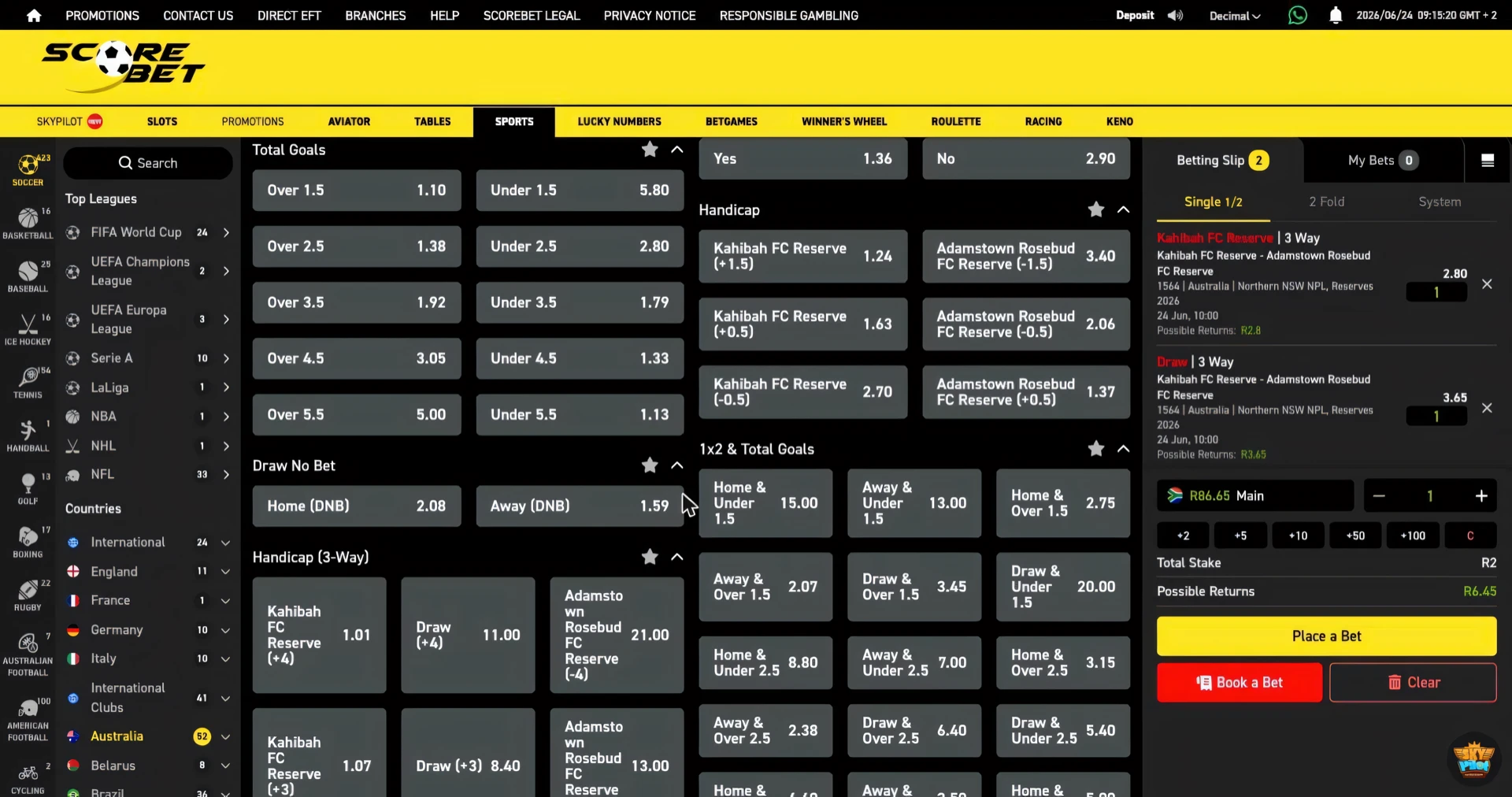
Place it on Scorebet, step by step
- 1Find the Draw No Bet section
Open a match on Scorebet Sports and scroll down to the Draw No Bet section.
- 2Pick Home or Away
Tap Home (DNB) or Away (DNB). The selected button turns yellow.
- 3Stake and place
Enter your stake in the Betting Slip and tap Place a Bet.
Example: Draw No Bet vs 3 Way
| Bet type | Odds | Home win | Draw | Away win |
|---|---|---|---|---|
| 3 Way Home | 2.80 | Win | Lose | Lose |
| Home DNB | 2.08 | Win | Refund | Lose |
| 3 Way Away | 2.10 | Lose | Lose | Win |
| Away DNB | 1.59 | Lose | Refund | Win |
DNB is ideal when you're confident a team will win but the draw is a real possibility. The lower odds are the price of insurance against a level result.
Frequently asked
What does draw no bet mean?
Draw No Bet means the draw is taken out of play. If your team wins, the bet pays. If the match is drawn, your stake is refunded in full. If your team loses, the bet loses. It's a win bet with the draw outcome removed.
Why are draw no bet odds lower than the win price?
Because the draw can no longer cost you. On a straight win bet a draw loses your stake; on Draw No Bet it gives the stake back. The bookmaker prices in that safety net, so DNB pays less than backing the same team to win outright.
What's the difference between draw no bet and double chance?
On a draw, Draw No Bet refunds your stake while Double Chance (1X or X2) pays out a small return. DNB pays more when your team wins; Double Chance has the higher strike rate. Pick DNB if you only want the win but don't want a draw to lose, and Double Chance if you'll take a small profit on the draw too.
Why is draw no bet essentially the same as a level Asian handicap?
Backing a team draw-no-bet is identical in outcome to taking them on a 0 Asian handicap — win and you collect, draw and your stake comes back, lose and it's gone. Books that don't list a DNB market often carry the same bet as Asian handicap 0, and the price can differ slightly between the two labels. If one isn't offered or prices better, the other does the same job.
How is a draw-no-bet price actually derived from the 1X2 odds?
The book strips the draw out and redistributes the stake across the two win outcomes, so the DNB price sits between the straight win odds and even money depending on how likely the draw was. The shorter the draw price on the 1X2 board, the bigger the cut DNB takes from your win return, because more stake is being insured. That's why DNB on a tight, draw-prone fixture pays noticeably less than on a one-sided game.