

Double Chance Betting
Double Chance covers two of the three match results in a single bet, so you only lose if the one outcome you left out comes in. The three options are 1X (home win or draw), 12 (home win or away win, the draw excluded) and X2 (draw or away win). You’re trading a lower price for a much higher chance of collecting.
The payout-for-safety trade-off
Covering two results out of three is safer, so the odds drop accordingly. You’re only ruling out a single outcome, which means the price sits well below a straight win bet. The bet does the obvious thing for you — it bins the result you fear most — but the bookmaker charges for that comfort. Across many bets, those short prices give back a lot of the value you’d keep on a riskier market.
A worked example in rand
Take a match with these 1X2 prices: home 2.10, draw 3.40, away 3.60. The Double Chance prices derived from them look roughly like this:
| Selection | Wins if | Approx odds |
|---|---|---|
| 1X | Home win or draw | 1.30 |
| 12 | Home or away win (no draw) | 1.33 |
| X2 | Draw or away win | 1.75 |
You stake R200 on 1X at 1.30. A home win or a draw returns R260 (R200 stake plus R60 profit); only an away win loses it. Compare that to backing the home win alone at 2.10, where the same R200 returns R420 but a draw also costs you. More safety, smaller reward.
When Double Chance beats the alternatives
Reach for Double Chance when you’re confident which one result won’t happen — a strong home side you can’t see losing, or a game where you’ll take the win-or-draw and skip the agony of a late equaliser. Use 12 when you expect a winner either way and want to dodge the draw entirely.
It overlaps with Draw No Bet, which also softens the draw — but they handle a draw differently: Double Chance 1X pays out on a draw at short odds, while Draw No Bet refunds your stake on a draw and pays more if your team wins. Pick Double Chance when you’ll happily collect a small return on the draw; pick Draw No Bet when you only really want the win but don’t want a draw to cost you.
A low price is still a price you can lose: back the wrong two results and the stake is gone like any other bet. Keep stakes sensible, and lean on the responsible-gambling tools if a session stops being fun. For the full three-way market this is built on, see 1X2 betting.
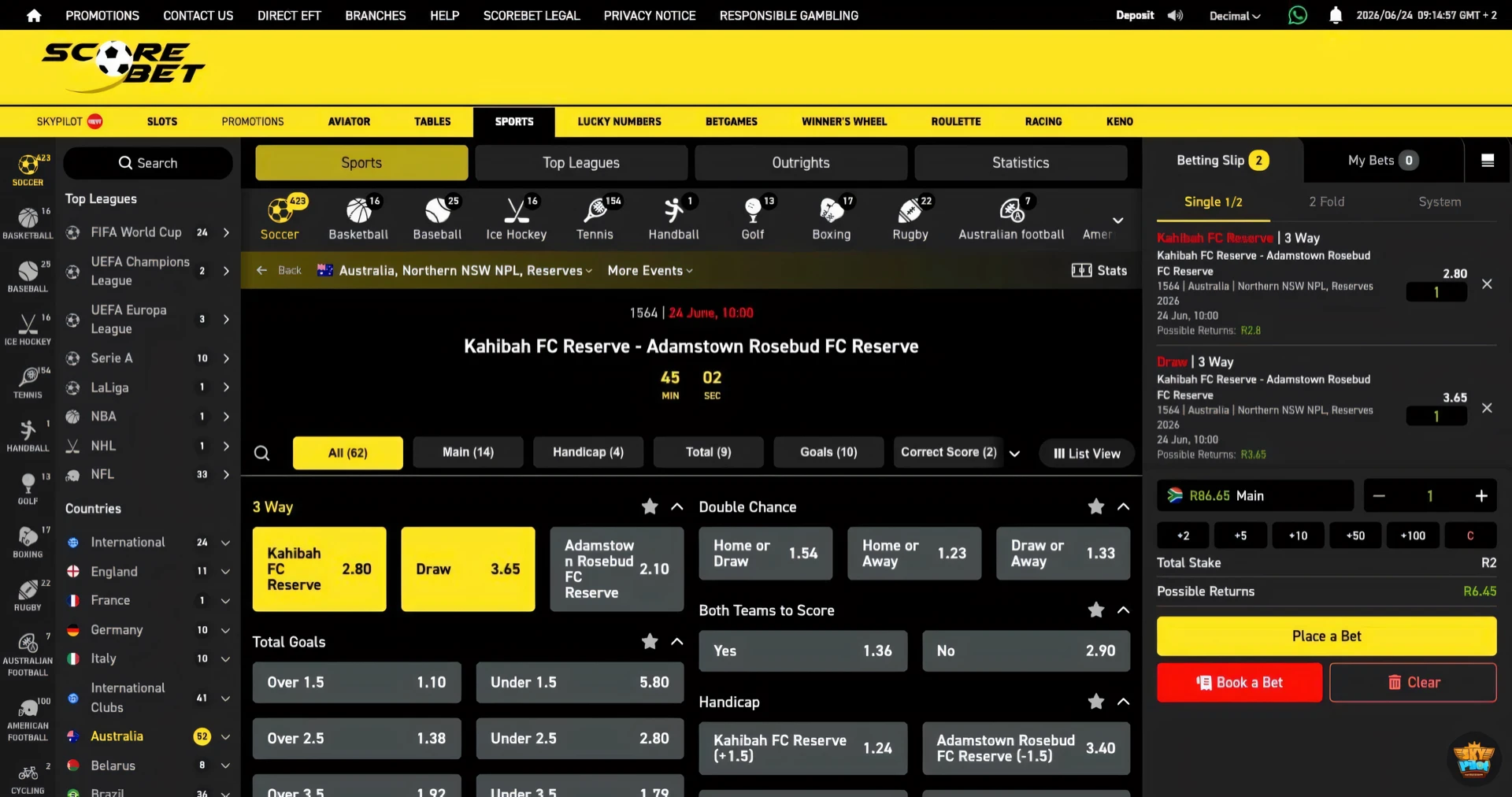
Place it on Scorebet, step by step
- 1Open a match
Go to SPORTS and open a fixture. The Double Chance market appears on the main betting page, next to the 3 Way.
- 2Pick your two outcomes
Tap 1X (home or draw), 12 (home or away, no draw) or X2 (draw or away). The button turns yellow and lands in your slip.
- 3Stake and place
Enter your stake in the Betting Slip, check the returns, then tap Place a Bet.
Example: Double Chance vs 3 Way
| Selection | Wins if | Odds | Coverage |
|---|---|---|---|
| 3 Way Home Win | Home wins | 2.80 | 1 outcome |
| Double Chance 1X | Home wins or draw | 1.54 | 2 outcomes |
| Double Chance 12 | Home or Away wins | 1.23 | 2 outcomes |
| Double Chance X2 | Draw or Away wins | 1.33 | 2 outcomes |
Double Chance odds are lower because you cover more outcomes. Use it when you want insurance against the draw or a specific loss.
Frequently asked
What does double chance mean in betting?
Double Chance lets you back two of the three possible match results in one bet. The three options are 1X (home win or draw), 12 (home win or away win), and X2 (draw or away win). You win if either of your two outcomes lands.
What is 1X in double chance?
1X means home win or draw. The bet pays if the home side wins or the match finishes level, and only loses if the away side wins. It's the option to back when you expect the home team not to lose.
Is double chance a good bet?
It raises your strike rate by covering two results, but the odds are low because you're only ruling out one outcome. Over time the low prices eat into returns, and it still loses whenever the single uncovered result comes in — so it's safer, not free money.
Why is a 1X double chance worse value than backing the home win and the draw separately?
Double chance is really two 1X2 outcomes folded into one selection, and the book takes its margin on the bundle rather than letting you price each leg yourself. If you split the same stake across the home win and the draw on the 1X2 board, you'd usually keep a touch more of the value — though you'd field two slips instead of one. The convenience of double chance comes at a small cut you don't see on the price.
When does 12 double chance make sense over a draw-no-bet?
Pick 12 — home or away win, no draw — when you're confident the game won't end level but genuinely can't call which side takes it. Draw-no-bet, by contrast, needs you to nominate a winner and only refunds if it's drawn. So 12 is the bet for 'someone wins, don't ask me who', while draw-no-bet is for 'this side wins and I want the draw insured'.