

Rugby Half Time Full Time
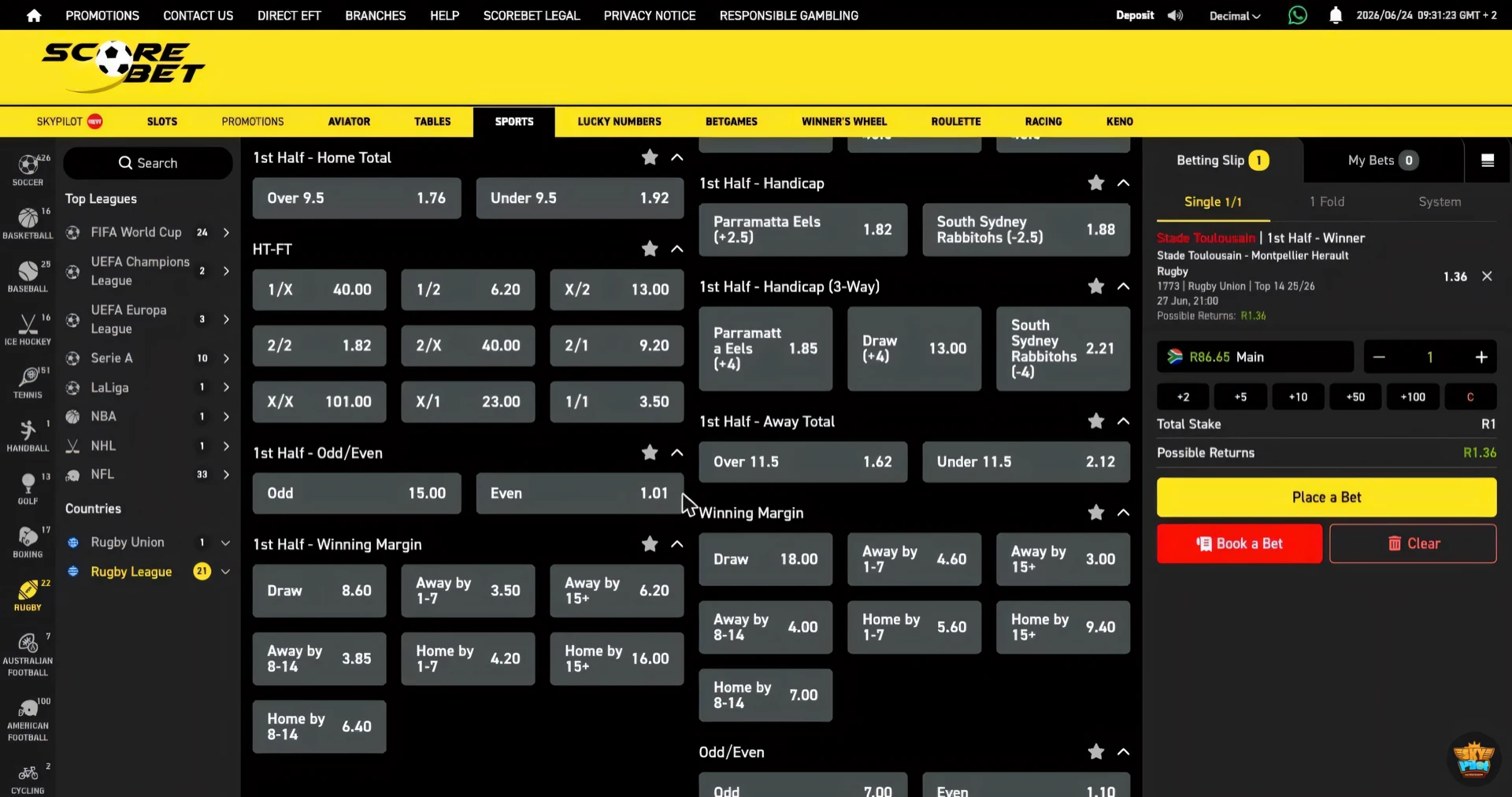
Half time / full time bundles two predictions into one bet: the leader at the break and the winner at full time, written as a pair of symbols where 1 is home, X is draw and 2 is away. So 1/1 is home in front the whole way, 2/2 is away leading throughout, and a comeback like 1/2 means home led at half time but away took the match. Because you’re calling two checkpoints, Scorebet multiplies the prices together — and the returns climb fast.
The straightforward lines, 1/1 and 2/2, sit only a little above a straight match result, because a strong side often leads from the first whistle to the last. The value lives in the harder reads: a slow-starting favourite you expect to fall behind early and turn it around (2/1 or 1/2), or the rare all-square game (X/X) at a huge price. Get one checkpoint right and the other wrong, though, and the whole bet loses — that’s the trade-off for the bigger odds.
If you only have a firm view on the first 40, the simpler first half winner is the cleaner bet.
Place it on Scorebet, step by step
- 1Open the match and find HT-FT
Open a rugby fixture on Scorebet and scroll to the HT-FT (Half Time / Full Time) section.
- 2Choose your combination
Pick the lead at the break and the winner at full time — e.g. 2/2 for away ahead at half time and winning the match.
- 3Stake and place
Tap the odds, enter your stake and tap Place a Bet.
The nine HT/FT combinations (1 = home, X = draw, 2 = away)
| HT / FT | Meaning | Odds | R10 returns |
|---|---|---|---|
| 1/1 | Home leading throughout | 3.50 | R35.00 |
| 2/2 | Away leading throughout | 1.82 | R18.20 |
| 1/2 | Home leads at HT, away wins | 6.20 | R62.00 |
| 2/1 | Away leads at HT, home wins | 9.20 | R92.00 |
| X/1 | Level at HT, home wins | 23.00 | R230.00 |
| X/2 | Level at HT, away wins | 13.00 | R130.00 |
| 1/X · 2/X | Leads at HT, drawn FT | 40.00 | R400.00 |
| X/X | Level at both | 101.00 | R1010.00 |
The safe pair is 1/1 or 2/2 — only a touch longer than a straight win, since a strong favourite often leads wire to wire.
For value, the comeback lines pay big: 1/2 (home leads, away wins) at 6.20, and the all-draw X/X at 101.00 for the brave.
Frequently asked
How does half time / full time betting work in rugby?
You predict the leader at both the break and at full time, written as two symbols — 1 (home), X (draw) or 2 (away). For example 1/2 means home leads at half time but away wins the match. Because you're calling two checkpoints, the odds are much bigger than a straight win.
What is the safest HT/FT bet in rugby?
1/1 (home leading throughout) or 2/2 (away leading throughout) are the most likely outcomes — only slightly longer than a straight match result, with the bonus that a strong favourite often leads from start to finish.
Why is HT/FT priced higher than a same-team straight win when the favourite usually leads anyway?
Even a dominant side does not lead at every half-time — they can concede an early penalty or a quick try and trail at the break before turning it on. The 1/1 line only pays if they are in front at both checkpoints, so it carries the extra risk that they win the match but were behind at 40 minutes. That added condition is exactly why it prices longer than the plain match result.
Why do the comeback lines like 2/1 pay so much more than the wire-to-wire ones?
A comeback requires two less-likely things to both happen: one side leads at the break and then the other overhauls them by full time. Leads in rugby tend to hold because the trailing team is chasing points against the clock, so a genuine turnaround is statistically rarer than a side simply staying ahead. The price reflects that compound improbability — big returns, but you are betting against the natural momentum of the game.